At the Sibelius park, in Helsinki, stands a statue called Ilmatar and the Scaup (1946) by Aarre Aaltonen. The theme of the statue is the creation myth of Kalevala.
From Helsinki Art Museum web page:
"The sculpture's subject is Kalevala's creation myth. Ilmatar, the spirit or goddess of the air is impregnated by a storm and expects Väinämöinen (the symbol of Kalevala's epic). She drifts in the sea for 700 years until a scaup settles on her knee, mistaking it for an islet, and lays seven eggs which she then begins to brood. The heat from the brooding makes Ilmatar move her leg and the eggs break, becoming the earth, sky, sun, moon, etc. Aaltonen's work is an interesting amalgamation of international Art-Deco-inspired forms and a national epic subject. The figure in the sculpture is evocative of the interpretations of the Classical myth of Leda and the swan portrayed in painting and sculpture."
 |
| Ilmatar and the Scaup |
The myth is very similar to the Egyptian creation myth, where the Bennu bird flies over the primordial watery abyss and lands on a rock. Bennu was the prototype for Phoenix, the symbol of rebirth the masons venerate.
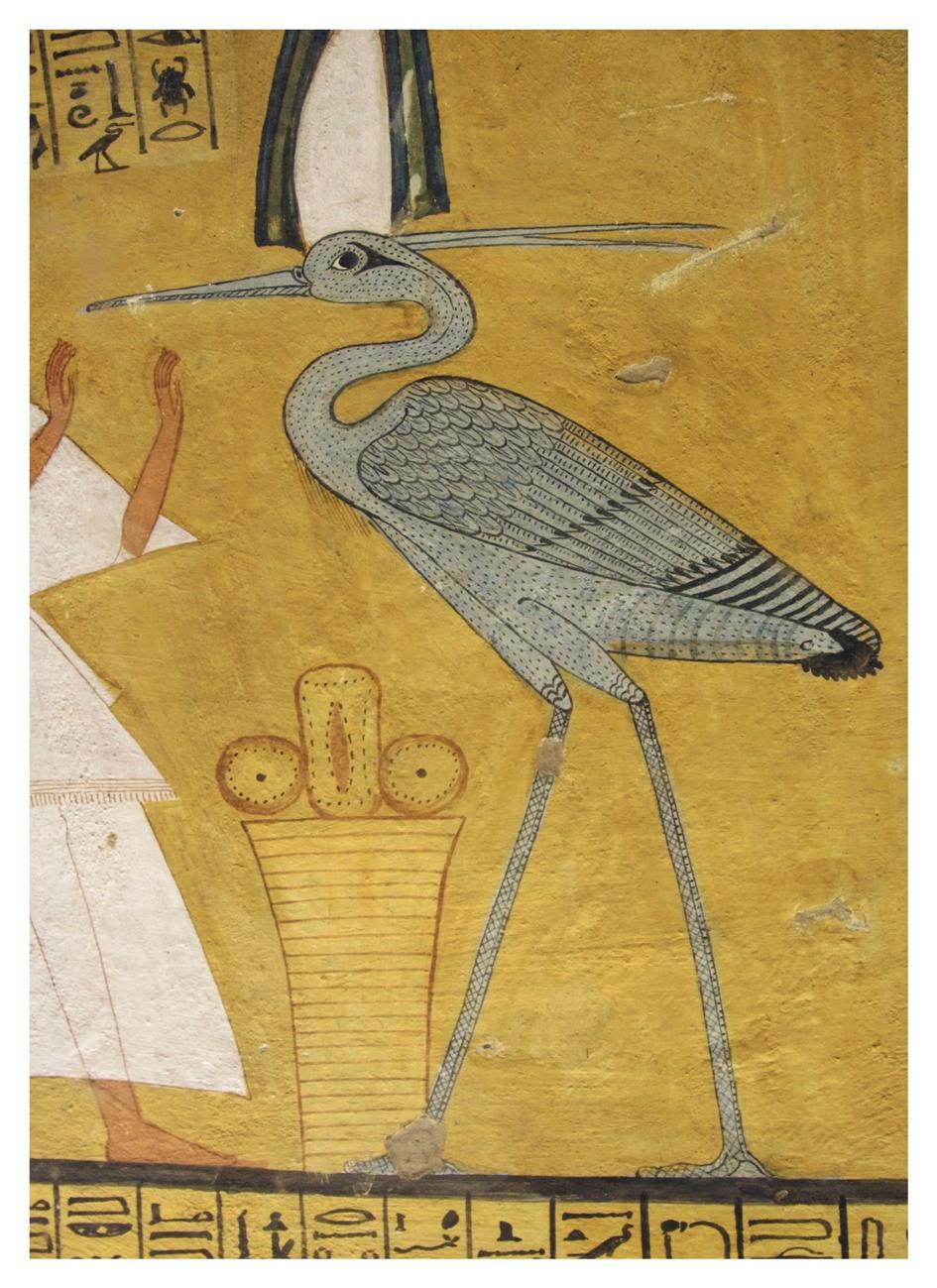 |
| Egyptian Bennu bird |
 |
| Masonic symbolism: Phoenix |
The masonic theme is fitting for the park named after a famous Finnish Freemason Jean Sibelius.
 |
| Composer and Freemason Jean Sibelius and the masonic "hidden hand" |
According to Manly Palmer Hall, the masonic eagle used to be Phoenix.
"These were the immortals to whom the term 'phoenix' was applied, and their symbol was the mysterious two-headed bird, now called an eagle, a familiar and little understood Masonic emblem." - Manly P. Hall (The Lost Keys of Freemasonry)
This is interesting, because the bird in the statue Ilmatar and the Scaup is actually an eagle, or more precisely a vulture. Just look at the size an shape of it. Does that look like a small duck? Compare it to a picture of a vulture:
 |
| A vulture |
The reason of this "mistake" is in the translation. 'Scaup' is in Finnish 'sotka'. In old Finnish that meant the same thing as 'kotka' - an eagle.
Looking at the statue with knowledge of symbolism, one sees the connection to ancient Egypt. Ilmatar, the mother goddess, is a version of the Egyptian mother goddess Wadjet - the origins of the masonic serpent and eye symbolism. The "scaup" (eagle/vulture) of the statue represents the counterpart of Wadjet, the vulture goddess Nekhbet - the origins of the masonic eagle symbolism. Together they are called The two ladies.
 |
| The two ladies - Wadjet (cobra) and Nekhbet (vulture) and Ra |
 |
| So called Tutankhamun death mask with The two ladies on the forehead |
In Egyptian belief system The two ladies were the mother goddesses who assisted the soul in birth and death. Wadjet was with the soul in birth, Nekhbet in death.
At some point in Egypt's history the role of The two ladies shifted to the next generation goddesses Isis and Nephthys. Again, they were the mother goddesses assisting the soul in birth and death.
 |
| The two ladies - twin goddesses Isis (left) and Nephthys (right) |
And when Christianity was born, the same concept was recycled again. Mary the mother of Jesus represents Isis/Wadjet (the birth givers), where as Mary Magdalene represents Nephtys/Nekhbet
(the death goddesses).
 |
| Isis and Horus - Mary and Jesus |
 |
| Mary Magdalene holding a skull (a death symbol) |
The two ladies were also the two mothers of the Sun. In many Egyptian pictures (see above) they were depicted with the sun. Together this trio formed the Egyptian hieroglyph called akhet. It depicts the sun in the horizon between two mountains. Mountains were goddess symbols, so again, this is about the sun and its' two mothers - The two ladies.
 |
| Akhet |
 |
| Akhet |
 |
| Example of modern akhet symbolism |
Akhet, the sun in horizon, is also a symbol of spring or fall equinox. On those days, the day and night are equally long. This is often depicted with a circle representing the sun and a horizon line in the middle of it. One of the most well known modern akhet symbol is the logo of Nissan: The sun in the horizon, with the horizon line, combined with the name Nissan. The name refers to the Hebrew calendar's month of Nisan, which starts at spring equinox.

On the symbol of the sign of Libra, is a another sun in the horizon. This time it refers to the fall equinox, which is on the day the Sun moves into the sign of Libra.

In the context of "the Elite's" Cult of Aton, akhet may also refer to the ancient capital city Akhenaton built during his reign as a pharaoh. The city was named Akhet-Aten, which means "Horizon of the Aten".
 |
| The ruins of Akhetaten, also known as Amarna |
So it's not a surprise to see akhet - or the sun in horizon - in Masonic symbolism.


Or in the symbolism of any organization with Masonic influence.


 |
| USSR coat of arms |


