Friday, 27 July 2018

Cult of Aton - part 11: Gaonim and the Princes of Masonry


According to the official history of Freemasonry, the origins of the brotherhood date back to 14th or 15th century stone masons and their building societies. This is the story "everybody knows". Too bad it's not true.

The official history is nothing more than a cover-up story to hide the fact, that the origins of Freemasonry go way back to ancient history. Most importantly, it hides the fact that Freemasonry is a branch of the Cult of Aton.

"The theory that our fraternity had its origin in the building societies of the middle age is sufficiently disproved by our ritual itself, which has many features that are totally inconsistent with any such theory, and point to a far more remote era; although many things relating to operative masonry were no doubt then ingrafted on it." - Robert Hewitt Brown, 32nd degree mason (Stellar Theology and Masonic Astronomy)

"Masonry was derived from Egypt, and more specifically from the court of Pharaoh Akhenaton, Egypt's great rebel monotheist" - Ralph Ellis (King Jesus)

It's not really that much of a secret, that Freemasonry has close ties to Judaism. The masonic temples are called Solomon's temples, and the masonic symbolism is full of references to Jewish history and traditions. But what is still somewhat of a secret, is how Judaism and Freemasonry are actually versions of atonism. (Recommended reading: Akhenaton and the Hyksos kings)

The Cult of Aton was kicked out of Egypt after the reign of pharaoh Akhenaton, but it did not die or disappear. It just re-branded itself as Judaism and later on to many other splinter factions. Among the expelled Jews was the elite priestly class, who were highly educated on occult knowledge in the mystery schools of Egypt. The members of this esoteric brotherhood were called the Gaonim. They were the keepers of the esoteric knowledge - just as Freemasons are today. It's the Gaonim and their traditions the Freemasons originate to.

Still wonder why the masonic logo has the capital "G"?


G is for Gaonim


Yes, the masons claim the G stands for God or Great Architect. That's the exoteric cover-up story to hide the true meaning.

"The enigmatic Masonic insignia "G" stands for the Gaonim or elite Atonist-Judites who later disguised their order under the name Freemason. The Gaonim were made up of elite Pharisees and Sadducees, who worshiped female deities such as Asherah. The Sadducees were falsely said to have ceased to exist after the Romans decimated Jerusalem in AD 70. However they simply went underground, and as the Gaonim (and later Sabbateans) they have been aligned with the Setian-Atonists for centuries. Ordinary religious Judaism provides this occult sect with a perfect cover." - Michael Tsarion 

"According to Albert Pike the ithyphallic pillars Jakin and Boaz represent the two solstices of summer and winter. The globes represent the earth and celestial sphere. The black and white squares represent ignorance and knowledge, overworld and underworld. Knowledge has long been associated with light. The word knowledge comes from "Gnosis." The capital "G" is a sigil for occult knowledge and for the Gaonim - the Atonist Princes of Light. In their notion of reality, men are separated into those who are ignorant and those who are knowledgeable." - Michael Tsarion 

The word Freemason is actually a word play. It comes from the Egyptian words "Phre Massen" - the children of the Sun. Again, it's all about the Sun and the ancient Egyptian sun god Aton.

"We are informed by several distinguished writers that it (the word masonry) is a corruption of the Greek word 'MESOURANEO' which signifies 'I am in the midst of heaven,' alluding to the sun, which, 'being in the midst of heaven,' is the great source of light. Others derive it directly from the ancient Egyptian 'PHRE,' the sun, and 'MAS, a child: 'PHRE MASSEN'- the children of the sun, or Sons of Light." - Robert Hewitt Brown, 32nd degree mason (Stellar Theology and Masonic Astronomy)

"The so-called but misnamed "Jewish" co-conspirators who directed the operations of the Roman caesars and emperors, were Atonists. Specifically, they were leaders of the Order of Melchizedek (or Akhenaton). They were Pharisees and Sadducees of high rank, and keepers of the so-called "Oral Tradition" allegedly delivered to their ancestors at Mount Sinai. This quorum of sorcerers were also known as the Gaonim. In order to conceal their identity they began using the term Freemason meaning "Sons of the Sun." The capitalized letter "G" found on Masonic iconography refers to this super-secret Luciferian cabal." - Michael Tsarion (Irish origins of civilization)


The masonic square and compass are also of Egyptian origins. The compass represents the sky goddess Nut, and the square represents her counterpart earth god Geb. (See how Geb's body forms a square.)


Geb (laying on the ground) and Nut (the night sky arching over Geb)


It's important to understand, that common Jews have nothing to do with the Gaonim, or as some call them, the Judites. If you blame the Jews for everything, I'm afraid you are barking at the wrong tree. It's also important to understand, that common low level Freemasons have nothing to do with them either. We're not talking about common people, we're talking about "the Elite" - the people on the very apex of the power pyramid.

"The Gaonim have nothing in common with modern religious "Jews." Terms and appellations of this kind do not refer to the kind of sects or beliefs we might at first imagine. They refer to a caste of sorcerers descended from the corrupt solar cults (or Luciferians) of antiquity. Members of the British royal family are Judites, even though they belong to the Protestant religion. The Pope and his bishops and cardinals are likewise Judites, even though they belong to the Catholic religion." - Michael Tsarion (Irish origins of civilization)


G7 - wonder what the G stands for?


Another name for the Gaonim is the Princes of Masonry. This is the name 33rd degree Freemason Alber Pike used in his famous book Morals and Dogma for Freemasons at the very top of the brotherhood.

The three first degrees of Scottish Rite freemasonry (the most common rite) are called the Blue Lodge. Most of these people are usually ordinary people who joined Freemasons with innocent motives like personal spiritual growth or charity work. They do lots of good things to their community and are usually good decent people. 

But here's the trick: These good honest people will almost never rise to the top degrees. Why? Because the people at the top are cold, ruthless, corrupt and power hungry monsters who use the fraternity to their personal benefit. It's basically a club of psychopaths, who hand pick people from the lower degrees to join their club very selectively. They control who's in and who's out in their little "brotherhood inside the brotherhood".

In his book Morals and Dogma, the 33rd degree Freemason Albert Pike wrote openly how the masonic system is built to mislead and misguide the lower level masons, and how the people at the top - the Princes of Masonry - are the only ones who know what's really going on. 

"The Blue Degrees are, but the outer court or portico of the temple. Part of the symbols are displayed there to the initiate, but he is intentionally misled by false interpretations. It is not intended that he shall understand them, but it is intended that he shall imagine he understands them... The true explanation is reserved for the Adepts, the Princes of Masonry." - Albert Pike (Morals and Dogma)


"Blind" student of lower degrees


In practice, these Princes of Masonry are the 32nd and 33rd degree masons - the movers and shakers of the world. Their symbol is the masonic double-headed eagle. The motto of the 33rd degree is Ordo ab Chao - Order out of Chaos. By creating chaos, they keep things in order - in their order. 


Colin Powell, 33rd degree mason spreading lies at the UN to start a war.
Ordo ab Chao in practice.

33rd degree eagle and "Ordo ab Chao"


32nd degree eagle


It's no wonder the number 33 can be seen is so many places.


The House of the Temple, the HQ of Scottish Rite Freemasonry and 33 pillars

The american eagle has 32 feathers on the left and 33 on the right

The City of London (technically a city state outside of UK) and the other 32 boroughs of London

Star of David - two triangles = 33

Monday, 23 July 2018

Logos and letters


How to use letters as symbols.


In 2008 the government gave AIG $180 billion rescue package.

ING revenues in 2017: €17,7 billion

"Mom, why don't they spell it City Bank?"


CNN - the "trusted media"

CIA - the "trusted" intelligence service

MI5 - another "trusted" intelligence service

Tuesday, 12 June 2018

I Am East I Am West


I Am East I Am West (1999) is a statue by Pekka Jylhä in North-West Helsinki.  The Helsinki Art Museum introduction:

I Am East I Am West consists of a large gilt bird made of bronze that is attached by its wing to a column-like red-painted steel pipe. The piece is 5.5 metres high and the bird's wingspan is about 2 metres. The artist Pekka Jylhä (b. 1955) has described the work as follows: "This work of Environmental Art has emerged and developed from a life on the boundary between two cultures. In my childhood in Ostrobothnia, we lived between two strong religious sects separated by the Lestijoki river. Sometimes it felt like I was forced to live with two separate minds. On the other hand, the boundary was a no-man's land where the sects neutralized each other and life was freer and happier.

"An earlier version of this work is entitled Attack (Galleria Anhava, 1992) after Eetu Isto's painting of the same name from 1899. This earlier version consists of a two-headed black bird that symbolizes fear and danger. "I Am East I Am West is a golden (24 carat!) bird flying high in the sky, symbolizing the pursuit of cultural autonomy, like the flight of a bird that is free to choose its own route between two strong cultures. "The canal flowing into the Baltic, beside which the bird is about to land, is an important element of the piece." I Am East I Am West was unveiled on May 27, 1999. The work belongs to the collections of the Helsinki Art Museum.


I Am East I Am West


Notice the language of the introduction text. See how they avoid using the word eagle? Instead they talk about large bird.

Why? Because they are trying to cover the obvious fact, that this sculpture is as masonic as it can get. Beyond any doubt, this is the masonic double-headed eagle. The museum knows it, but chooses not to mention it.


Masonic symbolism: The Double-headed Eagle


The name I Am East I Am West refers to the origins of the masonic double-headed eagle - Roman emperor Constantine, the hero of atonism who used the symbol as he united East and West Rome. (Read more.)


The double-headed eagle of emperor Constantine (Byzantine eagle)


There is another statue of a double-headed eagle in Helsinki, located in the city center, called The Stone of the Empress.


The Stone of the Empress


Having a look of the map reveals something very interesting of these two masonic statues. If you draw a straight line between them, you can see how several statues are located exactly on this same line. There is the statue of President Risto Ryti (1), who was a Freemason, the tarot memorial of another Mason, President Urho Kekkonen (2), masonic Ilmatar and the Scaup (3) and the tarot statue of Aleksis Kivi (4). In addition, on that same line is an ancient prehistoric holy/burial site (5).


From left to right: I Am East I Am West, ancient burial site (5), Ilmatar and the Scaup (3), statue of President Ryti (1), Urho Kekkonen memorial (2), Aleksis Kivi statue (4) and The Stone of the Empress.


What are the odds of coincidence having all these statues, with Freemasonry written all over them, on the same geometric line between two statues of double-headed eagle? You do the math.

So what is this "line forming" all about?

"The Elite" believes in many occult arts, including ley lines ("archaic tracks"), geometric alignments, and the manipulation of Earth's energy grid. I know it sounds ridiculous to many, but it's really not that important whether or not you believe in it. Important is to understand that "the Elite" takes it very seriously. For them it's ancient occult science and a matter of great importance.

"Ley lines are hypothetical alignments of a number of places of geographical interest, such as ancient monuments and megaliths." (Wikipedia)

"Most cultures have traditions and words to describe the straight, often geometric alignments that ran across ancient landscapes, connecting both natural and sacred prehistoric structures together. Usually the names given to represent these invisible lines are translated to an equivalent of 'spirit', 'dream', or 'energy' paths. However, apart from the physical presence of the sites themselves, proving the presence of a 'connection' between them is something that researchers have found notoriously elusive." (ancient-wisdom.com)

On of the most famous ley lines: St. Michael alignment


It's an ancient art. It's not a coincidence one of the structures on the geometric alignment between the two double-headed eagles is thousands of years old burial site. And it's not a coincidence the burial site is right in the middle of these eagle statues.


The ancient burial site in Helsinki


The belief system behind this line forming is all about control. "The Elite" believes the Earth's energy grid has an affect on human mind and consciousness. By manipulating the Earth's natural energy grid, they believe they can manipulate the mind of the people. This geometric alignment in Helsinki is just one small example in one small city. Using geometric alignments with esoterically important structures in cities all over the world, "the Elite" believes they can affect the minds of the people in those cities.

So does it work? Well, let's look at this question from another angle: "The Elite" has studied and preserved the esoteric knowledge of the ancients for thousands of years. Would they go through all that trouble of building these alignments all over the world, if it didn't work?

You tell me.


Monday, 4 June 2018

Ilmatar and the Scaup


At the Sibelius park, in Helsinki, stands a statue called Ilmatar and the Scaup (1946) by Aarre Aaltonen. The theme of the statue is the creation myth of Kalevala.

From Helsinki Art Museum web page:
"The sculpture's subject is Kalevala's creation myth. Ilmatar, the spirit or goddess of the air is impregnated by a storm and expects Väinämöinen (the symbol of Kalevala's epic). She drifts in the sea for 700 years until a scaup settles on her knee, mistaking it for an islet, and lays seven eggs which she then begins to brood. The heat from the brooding makes Ilmatar move her leg and the eggs break, becoming the earth, sky, sun, moon, etc. Aaltonen's work is an interesting amalgamation of international Art-Deco-inspired forms and a national epic subject. The figure in the sculpture is evocative of the interpretations of the Classical myth of Leda and the swan portrayed in painting and sculpture."


Ilmatar and the Scaup


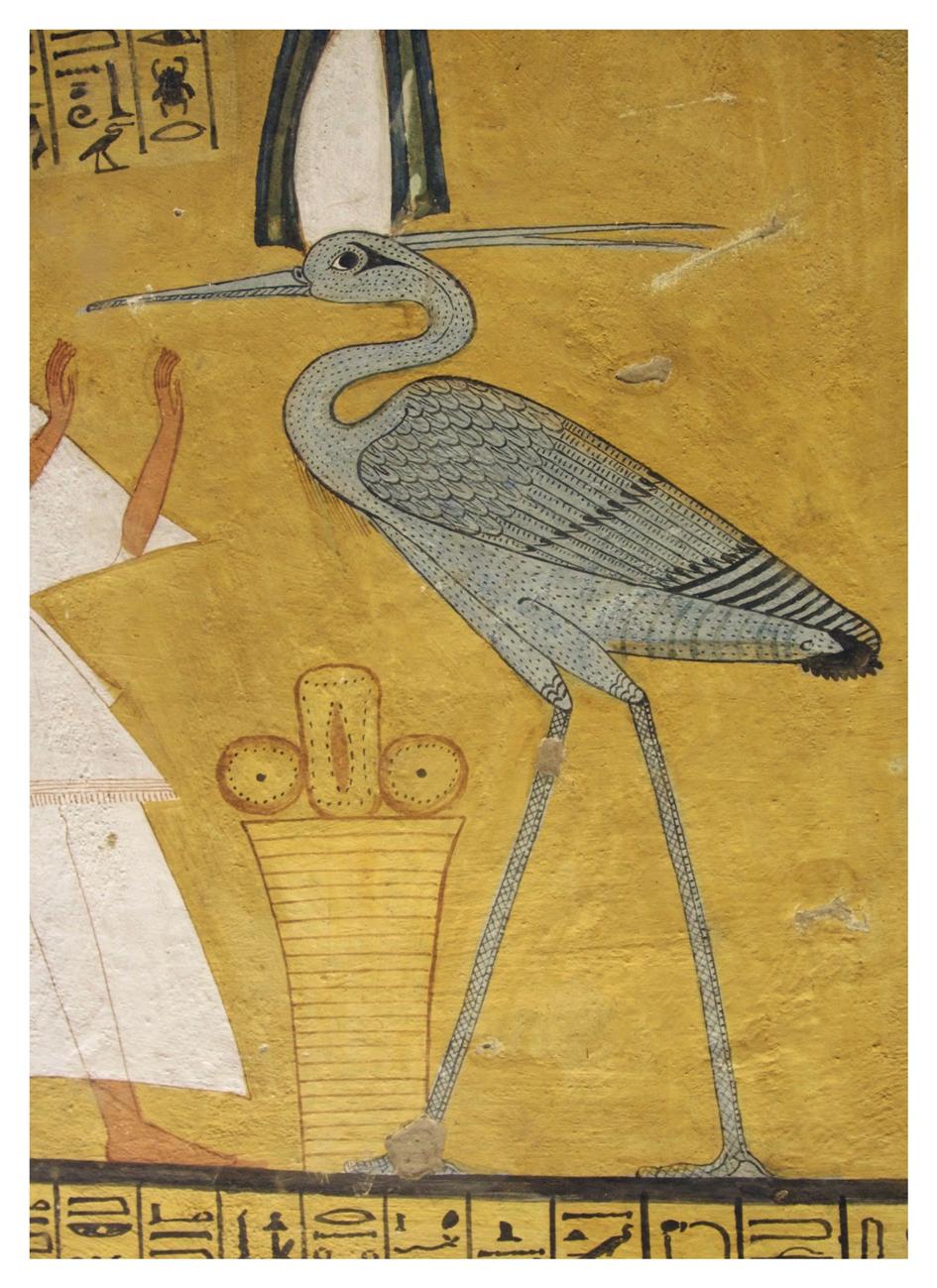
The myth is very similar to the Egyptian creation myth, where the Bennu bird flies over the primordial watery abyss and lands on a rock. Bennu was the prototype for Phoenix, the symbol of rebirth the masons venerate.


Egyptian Bennu bird

Masonic symbolism: Phoenix


The masonic theme is fitting for the park named after a famous Finnish Freemason Jean Sibelius.


Composer and Freemason Jean Sibelius and the masonic "hidden hand"


According to Manly Palmer Hall, the masonic eagle used to be Phoenix.
"These were the immortals to whom the term 'phoenix' was applied, and their symbol was the mysterious two-headed bird, now called an eagle, a familiar and little understood Masonic emblem." - Manly P. Hall (The Lost Keys of Freemasonry)

This is interesting, because the bird in the statue Ilmatar and the Scaup is actually an eagle, or more precisely a vulture. Just look at the size an shape of it. Does that look like a small duck? Compare it to a picture of a vulture:


A vulture


The reason of this "mistake" is in the translation. 'Scaup' is in Finnish 'sotka'. In old Finnish that meant the same thing as 'kotka' - an eagle.

Looking at the statue with knowledge of symbolism, one sees the connection to ancient Egypt.    Ilmatar, the mother goddess, is a version of the Egyptian mother goddess Wadjet - the origins of the masonic serpent and eye symbolism. The "scaup" (eagle/vulture) of the statue represents the counterpart of Wadjet, the vulture goddess Nekhbet - the origins of the masonic eagle symbolism. Together they are called The two ladies.


The two ladies - Wadjet (cobra) and Nekhbet (vulture) and Ra

So called Tutankhamun death mask with The two ladies on the forehead


In Egyptian belief system The two ladies were the mother goddesses who assisted the soul in birth and death. Wadjet was with the soul in birth, Nekhbet in death.

At some point in Egypt's history the role of The two ladies shifted to the next generation goddesses Isis and Nephthys. Again, they were the mother goddesses assisting the soul in birth and death.


The two ladies - twin goddesses Isis (left) and Nephthys (right)


And when Christianity was born, the same concept was recycled again. Mary the mother of Jesus represents Isis/Wadjet (the birth givers), where as Mary Magdalene represents Nephtys/Nekhbet
(the death goddesses).


Isis and Horus - Mary and Jesus

Mary Magdalene holding a skull (a death symbol)


The two ladies were also the two mothers of the Sun. In many Egyptian pictures (see above) they were depicted with the sun. Together this trio formed the Egyptian hieroglyph called akhet. It depicts the sun in the horizon between two mountains. Mountains were goddess symbols, so again, this is about the sun and its' two mothers - The two ladies.


Akhet

Akhet

Example of modern akhet symbolism


Akhet, the sun in horizon, is also a symbol of spring or fall equinox. On those days, the day and night are equally long. This is often depicted with a circle representing the sun and a horizon line in the middle of it. One of the most well known modern akhet symbol is the logo of Nissan: The sun in the horizon, with the horizon line, combined with the name Nissan. The name refers to the Hebrew calendar's month of Nisan, which starts at spring equinox.


On the symbol of the sign of Libra, is a another sun in the horizon. This time it refers to the fall equinox, which is on the day the Sun moves into the sign of Libra.


In the context of "the Elite's" Cult of Aton, akhet may also refer to the ancient capital city Akhenaton built during his reign as a pharaoh. The city was named Akhet-Aten, which means "Horizon of the Aten".


The ruins of Akhetaten, also known as Amarna


So it's not a surprise to see akhet - or the sun in horizon - in Masonic symbolism.


Or in the symbolism of any organization with Masonic influence.


USSR coat of arms